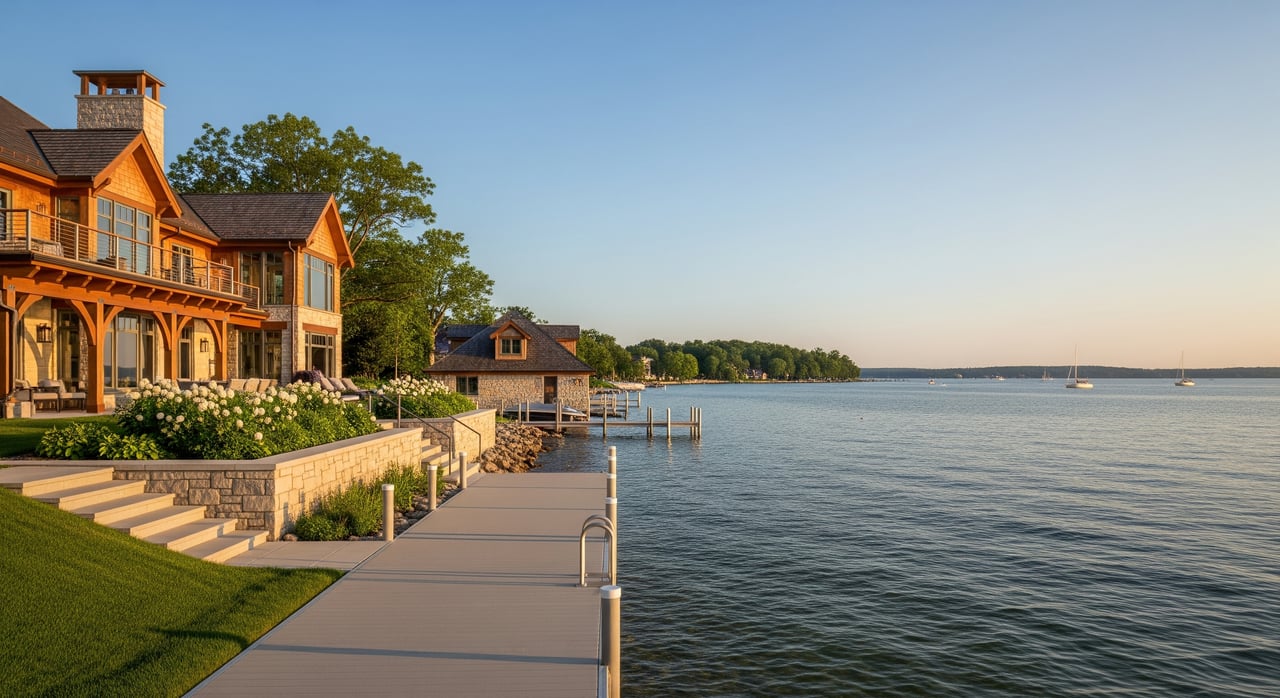
Is your Lake Geneva shoreline worth more than the house itself? If you are eyeing a sale, you know waterfront buyers look past square footage to what really matters on the lake. You want a price that reflects your frontage, views, and boating lifestyle without leaving money on the table. In this guide, you will learn a clear, step-by-step method to price a Lake Geneva lakefront with confidence, using the same logic seasoned appraisers and top agents rely on. Let’s dive in.
What Lake Geneva buyers value
Buyers for Lake Geneva fall into a few groups, and each values different features.
- Chicago weekend and second-home buyers want turnkey condition, easy upkeep, deep water for boating, and strong views. Drive time and convenience matter.
- Local and full-time buyers focus on year-round comfort such as reliable heating, insulation, and utilities, along with practical access in winter.
- Investor-minded buyers, where permitted, look at occupancy patterns, local rules, and income potential.
Understanding your most likely buyer helps you highlight the right features and set a price that aligns with real demand.
Start with the shoreline
Valuation begins at the water. Site attributes shape price before interior finishes.
Frontage width
Frontage is a scarce resource. Wider frontage usually commands a premium because it provides more privacy, better dock placement, and a broader view. Use a recent survey to verify linear feet and shoreline usability. If frontage is shallow at the dock, its functional value may be lower than a shorter stretch with deeper water.
View corridors
A panoramic, unobstructed view is worth more than a partial sightline. Classify your view as panoramic, partial, or obstructed and document it with daytime photos from key rooms. Note any seasonal changes when foliage fills in or recedes.
Water clarity and quality
Clearer water enhances aesthetics, swimming, and long-term appeal. Support differences with monitoring data from local lake organizations or the Wisconsin DNR, not just personal impressions. If your stretch enjoys visibly better clarity or shoreline condition, that merits an adjustment against comps with murkier water or heavier vegetation.
Boat traffic and noise
Proximity to marinas, public launches, or popular high-wake corridors increases noise and wake action. Classify traffic as low, moderate, or high based on time-of-day and seasonal patterns. Expect downward adjustments for heavy traffic exposure compared to quieter stretches.
Dock, lift, and boathouse
Permitted docks, boat lifts, and boathouses carry real value. Depth at the dock, safe moorage, and permitted structures can justify a premium. Keep records of permits, maintenance, and soundings at the dock to verify depth.
Shoreline slope and elevation
Steeper sites may offer superior views and privacy, yet they can limit yard usability and add maintenance costs. Stabilized shorelines with riprap or retaining structures can offset erosion concerns. If needed work is obvious, factor a cost-to-cure adjustment.
Legal and regulatory constraints
Riparian rights, access easements, conservation restrictions, and short-term rental rules all affect use and marketability. Verify your title, easements, and any municipal or shoreland zoning rules for piers and shoreline improvements before you price.
Utilities, septic, and floodplain
Buyers want clarity on septic capacity, well quality, and any floodplain status. Gather inspection reports and check FEMA maps early. Known costs to upgrade septic or obtain flood insurance should be reflected in pricing.
Build a tight comp set
The right comps make pricing faster and more accurate.
- Start on the same lake. Lake characteristics are site-specific. Whenever possible, use sales from the same shoreline or contiguous basin.
- Choose the unit of comparison. Use price per linear foot of frontage as a guide, but reconcile it with total sale price, usable land area, and improvements. Consider frontage, acreage, and whole-property comps together to paint a full picture.
- Match the highest-impact site features first. Prioritize comps that align on frontage range, view quality, dock and depth capability, and boat traffic exposure. Then match on gross living area, beds and baths, year built or renovated, and amenities.
Adjust in a clear hierarchy
Apply adjustments in a consistent order and document your logic so buyers and appraisers can follow it.
- Site attributes. Adjust for frontage, depth at the dock, view, and water clarity.
- Access and features. Consider dock, boathouse, and shoreline improvements.
- Regulatory and use. Factor in easements, riparian rights, and any restrictions.
- Structure and condition. Account for renovation level, deferred maintenance, and system ages.
When market evidence is strong, quantify the adjustment using multiple recent sales. Where data is thin, present a qualitative range and support it with buyer behavior and feature scarcity.
A simple comp logic example
- Comp 1: Similar GLA, 80 feet of frontage, shallow moorage, and an obstructed eastern view. Adjust downward for the view and moorage limits relative to your property if your view is open and depth is better.
- Comp 2: Same lake, 65 feet of frontage, deep water, and a fully renovated interior. Adjust upward for deeper moorage and turnkey interiors, but downward for smaller frontage if your lot is wider.
- Reconcile: If your property has 75 feet of frontage, deep moorage, and average interior condition, your reconciled range should capture both the frontage difference and the renovation premium.
Account for timing and seasonality
Waterfront sales can be highly seasonal. Adjust for market movement between a comp’s sale date and your listing date using local MLS trends on months of supply and days on market. Also note whether a comp sold in peak season or winter. A high-season sale may not translate one-to-one in an off-season market.
Set your price range with purpose
After adjustments, you should land on a tight value band and a recommended list price. Consider your confidence level. If multiple close comps exist, confidence is higher. If your home is unique, acknowledge a wider range.
A smart pricing entry can create early momentum. On a lake with limited inventory, buyers compare a short list of options. Pricing slightly below the lower end of your justified range can increase showings and spark competition, but it should align with your goals and timeline.
Prep to protect your net proceeds
A few targeted steps can speed your sale and strengthen your final price.
- Focus on high-visibility fixes. Shoreline stabilization, dock repairs, and selective kitchen or bath updates often outperform cosmetic-only projects.
- Gather proof up front. Surveys, dock and pier permits, water quality data, and recent renovation receipts reduce buyer friction and keep deals together.
- Invest in professional media. Drone photography and aerial site maps that show frontage, view corridors, and proximity to marinas help buyers understand your value at a glance.
- Order key inspections early. Septic evaluations, well reports, and pre-listing inspections resolve questions before they cost you time and leverage.
- Tailor the story to your strongest buyer. For Chicago second-home buyers, emphasize turnkey condition, deep water, and low-maintenance living.
Your Lake Geneva listing checklist
Use this checklist to organize your pricing file and speed due diligence.
- Survey confirming linear frontage and lot boundaries
- Title report showing riparian rights and any easements
- Dock, pier, and shoreline permits; records of stabilization work
- Soundings showing depth at the dock
- Septic inspection and well report
- Contractor estimates for obvious repairs or upgrades
- Photos documenting view quality from key rooms and outdoor areas
- Notes on boat traffic patterns and proximity to launches or marinas
- Local MLS comps from the past 12–24 months with DOM and list-to-close ratios
- Any municipal or DNR shoreland zoning references relevant to your property
Work with a hands-on expert
Effective lakefront pricing blends data, shoreline expertise, and presentation. You deserve an advisor who manages the details and markets the lifestyle with credibility. With a boutique, owner-led approach, Stacy offers project management for staging and repairs, Compass Concierge options for strategic upgrades, professional photography and drone media, and a data-backed pricing strategy tailored to your stretch of shoreline and your likely buyer pool.
Ready to position your Lake Geneva home with precision? Schedule a private consult with Stacy Burgoon to discuss your property and timing.
FAQs
How do I quantify the value of Lake Geneva frontage?
- Start with same-lake sales and compare price per linear foot as a guide, then reconcile with whole-property prices based on view, depth at dock, and improvements.
What if my view is partially obstructed by trees or docks?
- Classify the view as partial and adjust against comps with panoramic views; support with photos and, if possible, drone imagery to make the difference clear.
How does boat traffic near marinas affect price?
- Heavier traffic and wakes reduce privacy and swimming appeal, so expect a downward adjustment compared to quieter stretches further from launches or marinas.
Do renovations or the shoreline matter more for buyers?
- The shoreline usually leads value, but turnkey interiors add a premium, especially for Chicago second-home buyers who prefer move-in readiness.
Should I list in summer or wait for off-season?
- Lakefront activity is seasonal; use local MLS trends and comp timing to adjust. High-season listings often see more traffic, but pricing precision matters in any season.
What documents should I provide before showings?
- A recent survey, dock and shoreline permits, water quality notes, septic and well reports, and renovation receipts help buyers act quickly and reduce renegotiation risk.