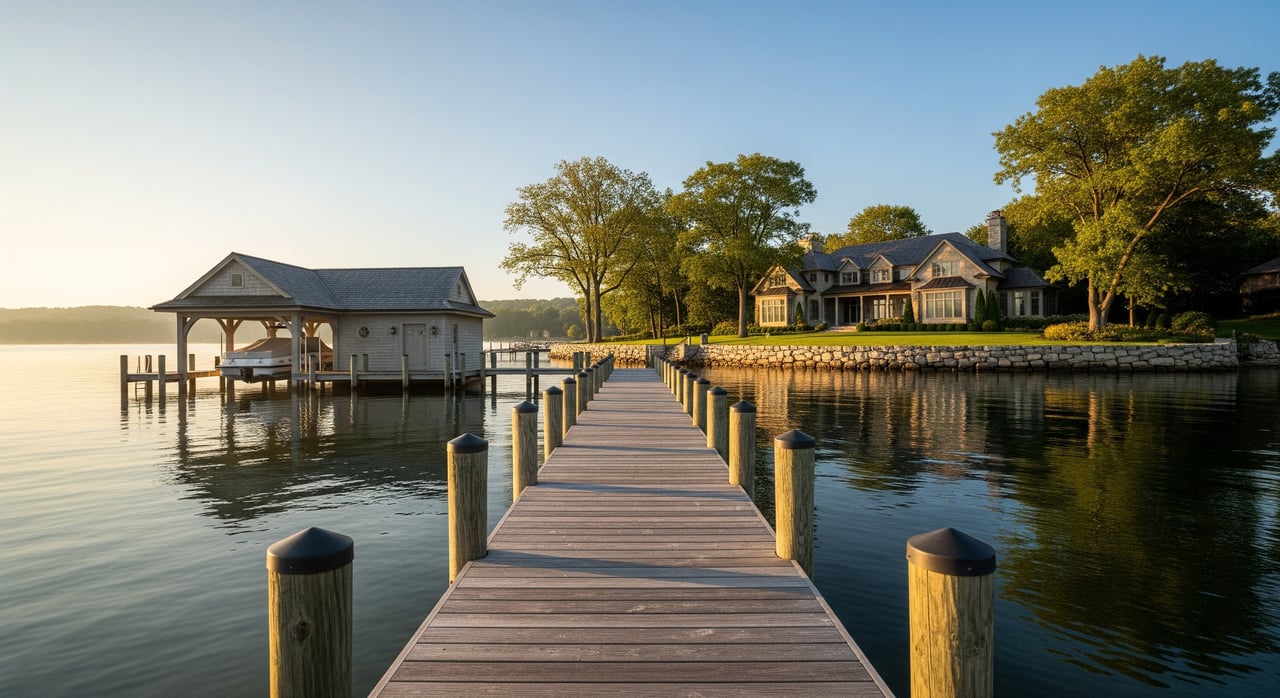
Buying a lake home around Lake Geneva is about more than views and morning boat rides. You are also buying a specific set of rights tied to the shoreline and the water in front of your property, and those details can make or break your plans. In this guide, you will learn what riparian rights mean in Wisconsin, how frontage is measured, what to check for docks and permits, and a practical checklist to use before you write an offer. Let’s dive in.
Riparian rights 101 in Wisconsin
Riparian rights are property interests that come with land touching a waterbody. They typically include access to the water, reasonable recreational and domestic use, and the ability to place a pier or mooring if allowed by law and permits. These rights are not unlimited. They are shaped by state rules, local ordinances, recorded easements, and the exact language in your deed.
If you want a deeper overview of how Wisconsin regulates shorelines and structures, start with the Wisconsin Department of Natural Resources and consumer-friendly UW–Madison Extension guides.
Public trust and lakebeds on Geneva Lake
Wisconsin follows the public trust doctrine. For navigable waters, the state holds title to the lakebed, not the waterfront lot owner. On lakes like Geneva Lake, this means your riparian rights do not include ownership of submerged land. Structures that extend over the water, such as piers or boathouses, often require state permits even when you own the adjacent shoreline.
The practical takeaway is simple. Before assuming a structure can stay or be expanded, confirm the permit history and current rules with the DNR and the local municipality. This prevents surprises and protects your investment.
Reasonable use and sharing the water
Riparian rights are based on “reasonable use.” You can use the water for recreation and access, but your use must respect other owners and public rights. Blocking navigable access, overbuilding a pier, or drawing excessive water can trigger disputes. When in doubt, review local ordinances and talk with nearby owners or the lake association to understand established practices.
Frontage: what you should confirm
Frontage is the linear feet of shoreline your parcel has on the lake. It influences whether and where you can place a private pier, your potential for moorings or lifts, and often your property’s value. Confirm frontage using the deed, a recent survey that shows the ordinary high-water mark (OHWM), and county plat maps. Do not assume property lines extend into the water beyond the OHWM.
Quick frontage checklist
- Obtain a recent survey that identifies the OHWM and measures frontage.
- Match the survey to the deed description and any referenced plats.
- Ask a licensed surveyor to note any encroachments near the shore.
- Confirm whether frontage controls pier placement or association rights.
Types of lake access around Lake Geneva
Not all “lake access” is the same. Listings may mean any of the following:
- Direct riparian frontage. You own shoreline adjacent to the water and hold riparian rights subject to law and permits.
- Shared private access. You may have an easement or community beach. Use of a pier or mooring can be limited by recorded rules.
- Association beach or path. The HOA controls the shoreline and may assign slips or maintain waitlists.
- Public access nearby. Proximity to a launch or park does not give you riparian rights.
When a listing notes “lake access,” review the recorded easement or association documents. The specifics determine your day-to-day use.
Docks, piers, boathouses, and permits
Many shoreline structures require approval from both the state and local governments. For Lake Geneva, check the Walworth County Land Use and Resource Management department and the City of Lake Geneva municipal code and permitting. Lake associations or management districts may add rules on pier size, location, or boat lifts. Conservation groups also promote best practices to protect water quality.
When evaluating a property, ask for permit records on any existing pier, boathouse, seawall, or shoreline modification. Unpermitted structures can be costly to fix or remove. If you plan changes, discuss feasibility with local officials before you close.
Before you buy, verify
- Existing permits for piers, lifts, seawalls, dredging, or boathouses.
- Any open violations or enforcement actions.
- Whether a slip or mooring is private, shared, or controlled by an HOA or municipality.
- Association bylaws and fees for docks and moorings.
- Who owns the lakebed and whether planned projects may affect the parcel.
Shoreline, vegetation, and erosion control
Stabilizing a shoreline with riprap, adding a seawall, or grading near the water typically needs permits. Removing aquatic plants or dredging almost always requires state approval. Many local organizations promote lake-friendly approaches that protect habitat and reduce erosion. If you want background on shoreline best practices, review the UW–Madison Extension guides and local resources like the Geneva Lake Conservancy.
If you plan to update landscaping at the water’s edge, build the timeline around permits. Early planning keeps your project on track.
Lake levels and local rules
On many southern Wisconsin lakes, lake level management and boating ordinances are well established. Ask who manages lake levels and whether any changes are planned. Local lake groups and municipalities post updates, and organizations like the Geneva Lake Conservancy share stewardship information.
Zoning, setbacks, septic, and wells
Shoreland zoning controls structure setbacks, minimum lot sizes, and shoreline buffers. Septic systems and wells also have required distances from the water, which can affect renovation plans. For Lake Geneva and the rest of Walworth County, check current rules and permit processes with Walworth County Land Use and Resource Management and your municipality.
A quick call to the local building and zoning office can save months of redesign later.
Real-world scenarios to watch
- Scenario A: “50 feet of frontage” with shared pier rights. The deed grants shoreline but also references “shared lake access.” A recorded easement may limit your exclusive use of the pier.
- Scenario B: Existing pier with no permit record. You could inherit a compliance issue. Ask the seller to resolve permits before closing or negotiate a credit or escrow.
- Scenario C: Planning riprap on Geneva Lake. Expect county and DNR permits, and possible limits on removing native vegetation.
- Scenario D: No private frontage but HOA beach access. You do not own the shoreline. Your dock or mooring rights depend on HOA rules and availability.
Your buyer checklist for Lake Geneva
Use this list to structure your due diligence from day one:
- Title and deed
- Confirm riparian rights language and stated frontage feet. Look for easements or covenants affecting shoreline use.
- Survey and OHWM
- Order a recent survey that shows the OHWM, measured frontage, and any encroachments.
- Permits and compliance
- Verify permits for piers, boathouses, seawalls, and shoreline work. Check for open violations.
- Dock and mooring rights
- Clarify whether slips are private, shared, or assigned by an HOA or municipality.
- Lakebed ownership and projects
- Determine if the lakebed is state owned. Ask about dredging or shoreline projects that may impact the property.
- Local regulation and lake groups
- Review municipal ordinances, county shoreland rules, and any lake association bylaws.
- Environmental and risk factors
- Assess flood risk, erosion history, wetlands, and invasive species. Confirm insurance availability.
- Utilities and septic
- Locate septic and well, confirm setbacks, and plan any required upgrades.
- Neighbor and use conflicts
- Ask about prior disputes related to docks, wakes, or weed harvesting.
- Professional review
- Engage a title company, licensed surveyor, and a Wisconsin real estate attorney. For consumer resources, see the Wisconsin REALTORS Association waterfront resources.
Work with a detail-oriented guide
Buying on Geneva Lake should feel exciting, not uncertain. You deserve clear answers about frontage, permits, and what you can build or enjoy at the shore. With a concierge approach and deep lakehouse experience, you get coordinated surveys, document reviews, and trusted referrals so you can move forward with confidence.
If a Lake Geneva purchase is on your horizon, let’s talk through your goals, the property type you want, and the due diligence path that protects your plans. Schedule a private consultation with Stacy Burgoon.
FAQs
What are riparian rights on Wisconsin lakes?
- They are the property rights that come with owning land next to a waterbody, including access and reasonable use, subject to state law, permits, and any recorded restrictions.
Do I own the lakebed if I have frontage on Geneva Lake?
- For navigable waters, the state holds title to the lakebed, so your rights do not include ownership of submerged lands in front of your parcel.
What does “lake access” mean in a Lake Geneva listing?
- It can mean direct frontage, a recorded easement to a shared beach or pier, or simply proximity to a public launch; always verify the recorded documents.
Can I build or expand a pier at a Lake Geneva home?
- Possibly, but you must confirm DNR and municipal requirements and whether frontage, setbacks, or association rules limit size or location.
How is shoreline frontage measured, and why does OHWM matter?
- Frontage is the linear feet along the shoreline, typically measured at the ordinary high-water mark; the OHWM affects boundaries and pier placement.
Who do I contact about permits and zoning in Walworth County?
- Start with Walworth County Land Use and Resource Management and your municipality, then consult the DNR for structures over water and shoreline work.